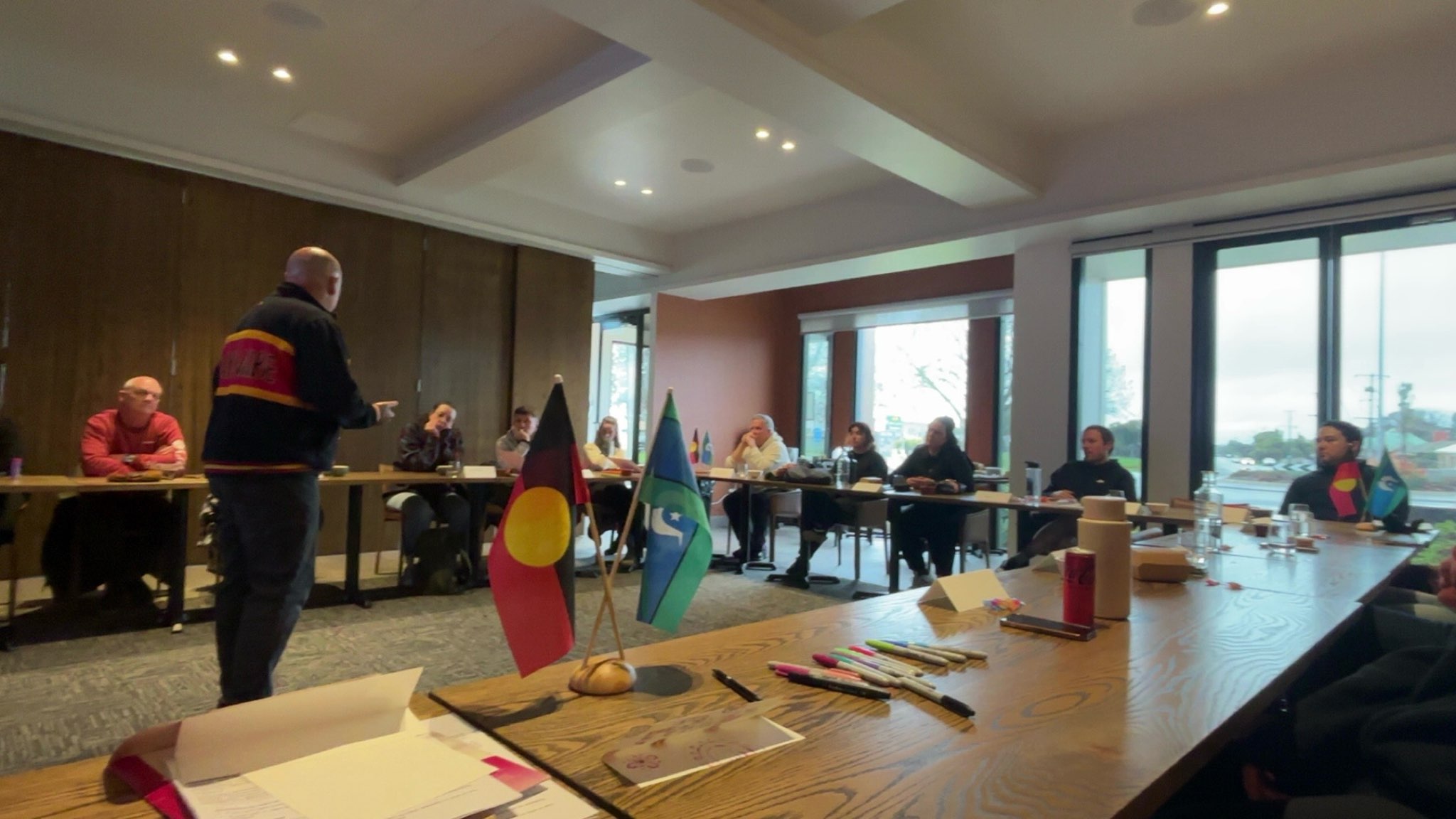
A Be BRAVE Feel SAFE session room with the Aboriginal and Torres Strait Islander flags on the table
Cultural facilitation

A facilitator runs the meeting. A cultural facilitator changes the room.

Twenty-plus years of Aboriginal practice in holding hard conversations, here and around the world. Listening first. Respecting cultural authority, process and the role of Elders. Valuing the people who bring the hard conversations into the room, and staying until the change holds.

What it is

A skilled listener who sees the whole room.

A cultural facilitator is neutral and skilled. We listen first, with curiosity, and judge actions, never people. We see and speak to the behaviours, patterns and systems in a room, and the ones outside it that shape it, and bring them into the open in a way that brings people together rather than pushing them apart.

We don't get rattled. People can be angry or upset, and that is often the sign that something real is being addressed. We hold it, unpack what is not working and how the communication needs to change, and stay with the organisation until the change holds.

How a cultural facilitator works

The difference

Facilitator and cultural facilitator.

Both are neutral. The difference is what they work with, and when they leave.

Compared

Facilitator

Cultural facilitator

Job
FacilitatorRuns the meeting: agenda, time, participation, an outcome.
Cultural facilitatorShifts the thinking and builds a stronger team. Listens first, works with what's strong in the room, and gets the result the organisation needs.
Works with
FacilitatorThe process.
Cultural facilitatorEvery dynamic, system and structure, inside and outside the room. With First Nations organisations, cultural authority.
Stance
FacilitatorNeutral outsider.
Cultural facilitatorNeutral, and a skilled listener. Brings behaviours and patterns into the open so the room can move forward.
Ends
FacilitatorWhen the session closes.
Cultural facilitatorWhen the change holds. We stay through Inquiry, Action and Maintenance.

Facilitator

Job

Runs the meeting: agenda, time, participation, an outcome.

Works with

The process.

Stance

Neutral outsider.

Ends

When the session closes.

Cultural facilitator

Job

Shifts the thinking and builds a stronger team. Listens first, works with what's strong in the room, and gets the result the organisation needs.

Works with

Every dynamic, system and structure, inside and outside the room. With First Nations organisations, cultural authority.

Stance

Neutral, and a skilled listener. Brings behaviours and patterns into the open so the room can move forward.

Ends

When the change holds. We stay through Inquiry, Action and Maintenance.

The method

Be BRAVE Feel SAFE, within Dhungai thinking.

Our methodology is Be BRAVE Feel SAFE, created by Shawn Andrews. It sits within Dhungai thinking and a First Nations approach. The process runs in three steps, and it works the same way for a cultural audit, a team, a whole organisation or one leader.

  1. Inquiry

    We listen first: to staff, leaders, community and Elders, and to what the organisation does and doesn't do.

  2. Action

    We facilitate the conversations and build the plans, structures and capability that come out of them.

  3. Maintenance

    We stay with it. The important questions never go away, so people, teams and organisations keep returning to them.

Brave is the pathway. Safe is the outcome.

Grounded in Be BRAVE Feel SAFE, created by Shawn Andrews

Rooms we get asked into

Where cultural facilitation changes the room.

Four rooms we are asked into most. Each one starts with listening.

Room 1

Building a strategic vision

We go out to everyone the strategy touches: survivors, staff, community and the board. We listen to what the organisation does and doesn't do, and how it could work better, then build the vision from what we hear. We did this with Connecting Home.

Room 2

A team or leadership group not reaching its goals

We come in with an understanding of the structures and systems around the team. We listen and unpack what is not working, who is not being heard and how, and what the communication needs to change to. Sometimes the question is whether the room is overreaching. It is a gentle approach, and we don't get rattled.

Room 3

Individual leaders ready to challenge their own norms

A human-centred approach for leaders ready to look at their own patterns and grow. That is what First Nations cultural facilitation and Be BRAVE Feel SAFE are built for, and it works in a room of one.

Room 4

Establishing cultural authority

Traditional Owner-led and community-controlled organisations building strong cultural authority and process, and their own revenue and structures, so they are not only sitting under government systems. This room brings community input back in through the right kind of listening.

When to call us

The moments a cultural facilitator is built for.

Work with Buneen

Start with a conversation, scoped to brief.

Tell us about the room you are trying to change, and what has already been tried. A senior Buneen team member responds within two business days. We offer low-bono work.