On the first morning in Bendigo, a eucalyptus tree stood in the room, wrapped in jute string. Nineteen people took a leaf, wrote why they were there, and tied it on.
Every leaf named learning.
That was the starting point for a three-day cultural immersion program on Dja Dja Wurrung Country, 28 to 30 October 2026. Twenty-two judicial officers and leaders of the Children's Court of Victoria took part. The Dhumba Murmuk Djerring Unit at Court Services Victoria hosted, and designed the program with Buneen down to the tree and the string.
The program ran in three movements: open the room, go to Country, turn learning into action.
Opening the room. The first day built a brave space and held it. It used current figures on Aboriginal children in the Children's Court, real history placed in that context, and the privilege walk. Keeping the content contemporary and specific to the Court is what let the room sit with truth-telling without being overwhelmed by it.
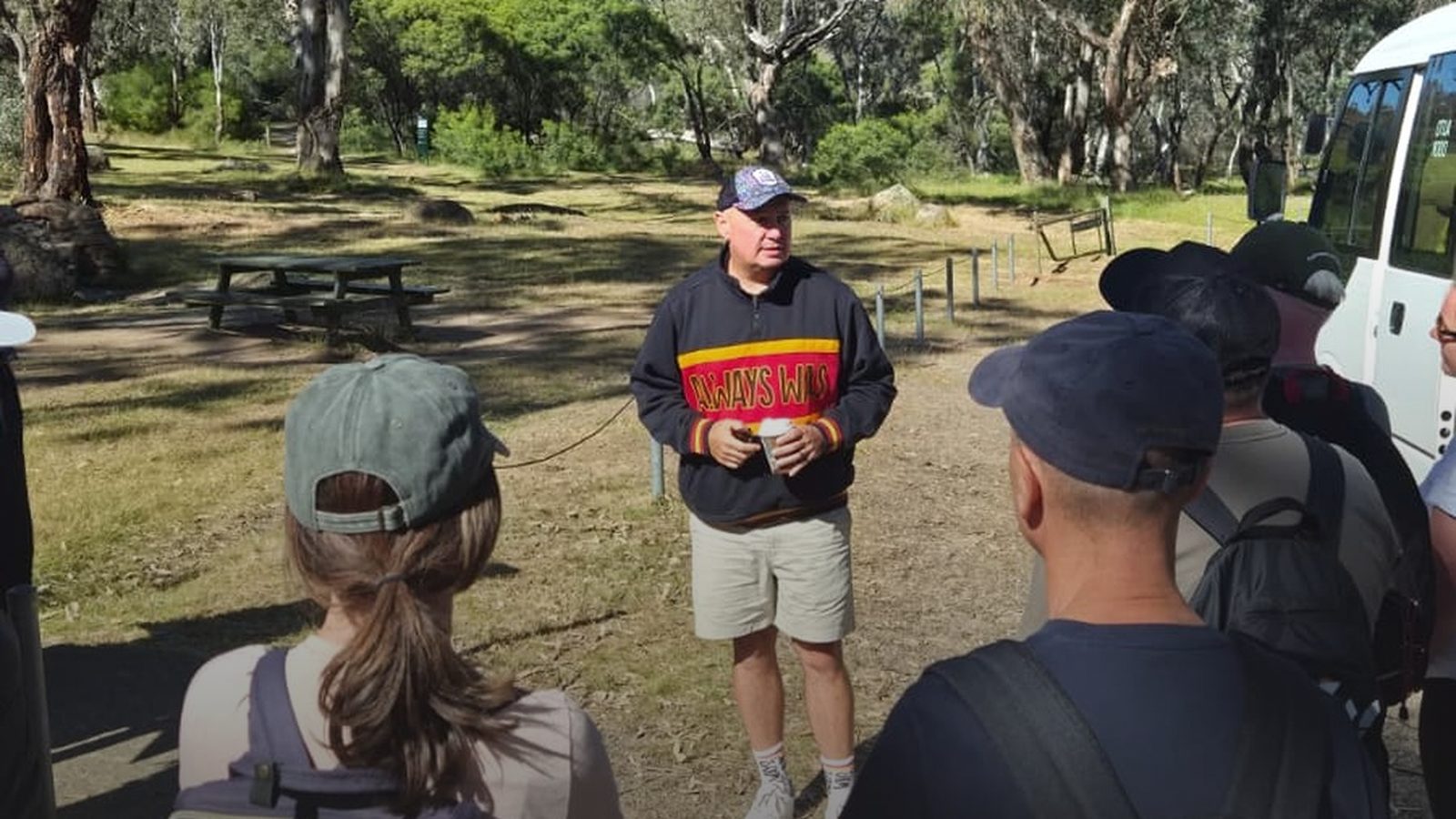
Going to Country. The second day was led by Djaara, the Dja Dja Wurrung people. It was the day the program turned. The group walked Country that is being healed, heard it as well as saw it, and had lunch at Djaara Dumawul. The Chair of Djaara spoke on the Recognition and Settlement Agreement and on enterprises built on economic strength. It was a strong example of local cultural authority, and of how First Nations peoples can work together. It also showed what is possible when someone who is not a Traditional Owner of that Country works on it alongside the people who are: cultural authority is expected, respected and adhered to, and there is unity. That is something a facilitator's slides cannot do.
Turning learning into action. On the third day the group moved from inquiry to action. First Nations leaders from across the courts visited and spoke about the work they do. It was extraordinary to see, and a privilege to listen to their work. All 22 participants wrote what had shifted for them. Country and connection was named most often (9 of 22), then the confidence to ask and be curious (7 of 22). Participants put their initials to 11 commitments, and there was real commitment to creating braver and safer spaces for Aboriginal people across the entire workplace. The idea of the Court coming to community appeared on four of the six group sheets.
What this shows about cultural immersion. Four conditions carried this program, and they travel to any organisation:
- The people hosting the program help design it. The build-up shaped a program that ran to time.
- Local cultural authority leads the day on Country.
- Truth-telling is contemporary and specific to the room's own work.
- Commitments have an owner and a date to come back to.
The program also shows what a bit of cultural immersion can do. A cultural facilitator has to adapt and work with people where they are at, at that time, and stay until the change holds.
The support of the Dhumba Murmuk Djerring Unit was wonderful. As hosts, they shaped the program and brought in the people and the practice that carried the cultural facilitation. Their work is part of why it held.
Buneen supports organisations to build these conditions. If your leadership group is ready to move from listening to committing, start at www.buneen.au.
Be brave, stay deadly.
With the Dhumba Murmuk Djerring Unit, Court Services Victoria, and Djaara, on Dja Dja Wurrung Country, Bendigo. Photos: Buneen.